
TL;DR
An ornamental fence made of ornamental iron delivers a slim, premium look that stands up to Austin sun and sudden wind—if you spec the right powder-coat class, protect cut/weld points, and design wind gaps that don’t turn panels into sails. For most homes, a duplex finish (hot-dip galvanizing + zinc-rich primer + super-durable polyester topcoat) with ⅝–¾ in. picket spacing and weep/drip details keeps rust at bay for 10+ years. If you want a feel for local installs, see our Austin fence projects.
Why ornamental iron fits Austin
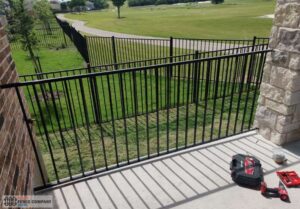
Austin yards juggle steep slopes, full-sun exposures, oak debris, and spring storm fronts. Ornamental iron answers with:
- Strength in slim profiles: No cupping or twisting like boards; clean lines complement modern and traditional homes.
- Open sightlines: Perfect along greenbelts and pools where airflow and views matter.
- Coat-and-forget durability: With proper prep and a well-stacked coat system, you avoid the blister-peel-rust cycle standard to bargain coatings.
If you’re comparing picket profiles, post sizes, and decorative options, browse our ornamental iron fence options for Austin to see typical heights, caps, and rail layouts.
Powder coat classes (and why “super-durable” matters here)
Not all powder coats age the same under UV exposure, at 100°F, and on reflective rooflines.
Standard polyester powder
- Pros: economical, broad color availability.
- Cons: faster chalk/fade on south/west elevations; more touch-ups by year 5–7.
Super-durable polyester (SDP) provides added security.
- Pros: better UV resistance, color hold, and gloss retention; ideal near pools and street-facing runs.
- Cons: slightly higher material cost; usually worth it in our climate.
The winning finish stack (duplex):
- Hot-dip galvanizing (HDG) after fabrication or zinc metallization for sacrificial protection.
- Zinc-rich epoxy or powder primer to lock onto the zinc and seal pores.
- Super-durable polyester topcoat (matte/satin black hides touch-ups best).
Field reality: Cut edges and welds are where coatings fail. Always finish after fabrication or require on-site conversion + zinc touch-up on any field cuts before topcoating.
Rust control: zinc, primers, welds & water management
Rust starts where water sits and oxygen sneaks under a nicked coating.
Galvanization options
- HDG after fab: Best overall—zinc wraps, welds, and interior cavities.
- Pre-galv tube + post-fab welds: Acceptable if welds receive zinc-rich repair and full powder coverage.
Pretreatment & primer
- Phosphate/zirconium pretreat boosts adhesion and corrosion resistance.
- Zinc-rich primer under the topcoat slows underfilm creep if a chip occurs.
Welds & corners
Grind smooth; seal pinholes—Prime with zinc; topcoat fully. Avoid sharp external corners that thin during cure.
Water management
- Weep holes at low rails release condensation.
- Sealed caps on verticals; drip edges on top caps.
- Bottom reveal: hold 1–2 in. off grade; 2–3 in. through swales.
Dissimilar metals
Use hot-dip galv or stainless fasteners; isolate with nylon washers where needed.
Wind gaps: openness, picket spacing & gust management
Solid planes catch wind. Planned openness preserves looks and keeps posts straight.
- Target openness: 40–55% for privacy-adjacent aesthetics with real wind relief.
- Typical picket spacing: ⅝–¾ in. clear gap at six ft. height looks upscale and rides out gusts.
- Avoid sails: Skip large, solid medallions/crests near top rails.
- Corners/end posts: Upsize posts or use kick braces where wind vectors converge.
When lots face west/northwest across greenbelts, openness + robust posts keep lines crisp after storm nights.
Austin-tuned specs box (copy/paste)
Use this baseline; we’ll adjust to HOA language, slopes, and gate scheme.
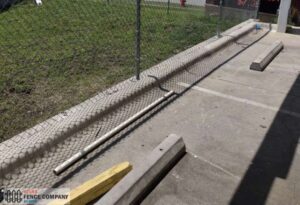
- Material: Ornamental steel, ⅝–¾ in. pickets, 1×1 or 1½×1½ rails.
- Finish (duplex): HDG after fab + zinc-rich primer + super-durable polyester topcoat.
- Posts: 2⅜ in. SS40/SS20 round or 2½ in. square; set 30–36 in. deep; bell bottoms in expansive clay; 10–12 in. footings.
- Openness: 40–55% (≈⅝–¾ in. picket gap).
- Weeps & caps: Weep at low rails; sealed caps on verticals; drip edges on tops.
- Fasteners: Hot-dip galv or stainless; isolate dissimilar contacts.
- Field cuts: Surface conversion → zinc-rich touch-up → compatible topcoat.
- Bottom reveal: 1–2 in. off grade; 2–3 in. at swales.
- Color: Matte/satin black preferred for heat and touch-up forgiveness; dark bronze by HOA request.
Gate frames, hinges & latch heights that stay aligned
Gates telegraph quality. Treat each as an engineered piece in its own right.
- Frames: Boxed steel perimeter (1½ in. tube) with internal boxing; weld a backing tab for latch strikes.
- Hinges: Two heavy barrel hinges to 48 in. width; three beyond that or on decorative/heavy infill.
- Reveals: Hold ⅛–3⁄16 in. on hinge/latch sides.
- Latch height: 42–48 in.—out of splash/soil zone and comfortable to reach.
- Operator-ready: Conduit paths, stiffener plates, and a positive stop for automations.
If you’re planning an opener, compare options and safety gear on our gate installation and automation page.
Cost factors (where budgets move)
- Finish system: Duplex costs more now, but less over its life.
- Geometry: Curves, finials, and custom motifs add fabrication hours.
- Site complexity: Rock coring, steep grades, mature roots, and long material carries.
- Gate count & width: Each gate is a mini-project; operators add power/safety hardware.
- Color & sheen: Specialty textures/colors may require custom batch runs.
Maintenance schedule for heat & storms
- Quarterly rinse where sprinklers or pool splash hit the fence; blow off oak pollen mats.
- Spring/Fall touch-ups: Spot chips at latches/hinges with zinc-rich primer + compatible topcoat.
- Vegetation control: Keep vines off steel—they trap moisture and hide early blisters.
- Grade checks: Re-establish the bottom reveal after heavy rains and mulch shifts.
For color choices that won’t cook finishes in August, take a look at heat-smart fence colors and finishes.
How to: Write a durable ornamental-iron spec for your estimate
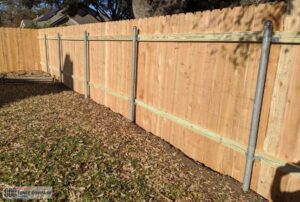
- Pick openness: Target 40–55% with ⅝–¾ in. picket gaps for wind relief and sightlines.
- Choose the finish stack: HDG after fabrication + zinc-rich primer + super-durable topcoat (matte/satin black).
- Detail water management: Weep holes, sealed caps, drip edges, and a 1–2 in. bottom reveal (2–3 in. at swales).
- Lock hardware: Hot-dip galv/stainless fasteners; hinge count by width; latch at 42–48 in.
- Set field-cut protocol: Surface conversion → zinc touch-up → compatible topcoat before hand-off.