
TL;DR
In Central Texas, wind + soil decide whether 4×4 posts are “good enough” or a false economy. Along open greenbelts, hilltops, and corners that take direct gusts, 6×6 posts (often steel or steel-sleeved) pay back in straighter lines, fewer call-backs, and a longer finish life—especially on tall privacy, horizontal styles, or cap-and-trim builds. In protected backyards on level grade with standard 6-ft privacy panels, well-set 4×4s can still be appropriate—but only with correct embedment, rail layout, and bay width. Want a site-specific spec (post size + depth + concrete) that matches your wind exposure and soil? The crews at Atlas Fence Company design for Austin’s limestone shelves, expansive clays, and gusty greenbelt edges so your fence stays tight for years.
Austin Wind Reality (and Why Post Size Matters)
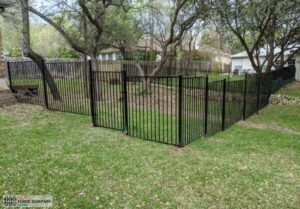
Austin’s “wind story” isn’t just spring fronts. It’s localized gusts created by topography:
- Hilltops and ridgelines (Westlake, Cat Mountain, parts of Lakeway) funnel crosswinds through fence runs.
- Greenbelt edges behave like wind tunnels; continuous, solid panels can “drum” and rack posts over time.
- Crowned streets and cul-de-sacs create low-level turbulence that hammers corner posts.
Post size is your first line of defense. As posts get stiffer (larger section, higher moment of inertia), fence deflection drops, rails stay seated, picket gaps don’t open, and stains don’t crack along fasteners. In short, bigger, stiffer posts keep the whole assembly calm.
When we design layouts for our fence post installation program in Austin, we match post size to wind, height, and bay width—not just to what’s in stock in the lumber aisle.
Soils: Limestone vs. Expansive Clay (Embedment Rules Change)
Two soils dominate Travis/Williamson counties, affecting the stability of wood posts :
Limestone shelves (West Austin, Lakeway):
Incredible bearing, but shallow bedrock can tempt shallow holes. Don’t. We core-drill and bond posts to competent rock with grout/epoxy so the hinge line and corners don’t tilt after the first thunderstorm. Larger posts transfer load more predictably into rock.
Expansive clay (Circle C, parts of Round Rock/Leander):
Swells in wet months, shrinks in drought. Shallow 4×4 posts become seasonal metronomes—leaning and re-straightening. Here, deeper, belled footings around 6×6 (or steel) posts resist heave and keep lines accurate.
Takeaway: Soil is a multiplier. The worse the movement, the more 6×6 pays back—because depth and diameter combine to resist rotation, making a significant difference .
Panel Height, Style & “Sail Area”: When Loads Jump
Wind load rises with height and solidity:
- 6-ft side-by-side: baseline private yard fence.
- Board-on-board: more solid → higher wind load; gaps never open, so pressure stays on the structure.
- Horizontal slats: modern, heavier per bay, needs stiffer posts to stop waves and “smiles.”
- Cap & trim: adds top weight and a “sail edge” that catches gusts.
- 7–8 ft sections: standard along greenbelts for sightline control—post size should step up with height.
If you’re going taller or denser to control views or noise, that choice often pushes the specification from 4×4 to 6×6 (or steel) even in otherwise protected yards.
4×4 vs 6×6: Structure, Stiffness & Real-World Performance
What changes when you upsize?
- Stiffness (bend resistance) increases dramatically as section size grows. That translates to less post “pumping” in gusts, fewer nail/screw frets, and tighter latches at gates.
- Fastener holding improves: rails and brackets have a wider, stronger bearing face.
- Tolerances stay in spec longer: corners remain square; stair-stepped runs hold their step heights.
Where 4×4 posts can still be appropriate:
6-ft privacy in sheltered interiors (no greenbelt exposure), short bays (6–7 ft), and two-rail panels with no cap/trim. Embedment must be textbook, concrete, consolidated, and top-shed water.
Where fence posts, particularly 6×6, win outright:
Wind-exposed back lines, corner posts, gate posts, board-on-board or horizontal styles, 7–8 ft heights, and any run adjacent to a trail or open field.
Post Depth & Concrete: The Multiplier That Makes Size Work

A bigger post can still fail if the footing is wrong. Depth, shape, and consolidation matter:
- Depth targets (typical): ⅓ of the exposed height is a common rule of thumb; add for clay movement or wind exposure. That puts many 6-ft fences near 26–36 in. in benign spots, deeper in clay/wind.
- Belling in clay: A widened base fights uplift/heave.
- Rock set: In limestone, bond to the shelf (core + grout) rather than stopping shallow on dust.
- Concrete quality: Consolidate in lifts, rod the hole to remove air, and crown the top for drainage.
- Rail height and spacing: Higher rails raise the “load arm.” If you run a cap & trim, consider the rail layout part of the structural plan—another nudge toward 6×6.
For a deeper dive on holes, mixes, and cure practices we’ve standardized here, see our companion guide on post depth & concrete for Austin soils—it explains why an excellent footing can make even a 4×4 feel “bigger” in service. (Related: Post Depth & Concrete for Austin Soils.)
Corners, Gates & Transitions: Where to Upsize First
If budget forces triage, don’t upsize every post—upsize the right ones:
- Corner posts: Two directions of load; they twist first. Make them 6×6 (or steel) with solid braces.
- Gate hinge & latch posts: Highest point loads. Use 6×6 or steel; tie to deeper footings; consider steel sleeves wrapped in cedar.
- End/terminal posts: Where runs stop at a house or column; torque concentrates here.
- Grade transitions: Where the fence steps, taller posts navigate stair steps without wobbling.
This targeted approach captures 80% of the payoff with a 20–30% cost delta.
Horizontal Fences, Cap & Trim, and Other Weight Adders
Design choices carry hidden structural taxes:
- Horizontal slats: Gorgeous, but heavier and more sensitive to fastener patterns. They read every millimeter of post deflection. 6×6 posts reduce the “wave” effect.
- Cap & trim: Adds weight up high and can act as a sail. If you love the finished look, prioritize 6×6 + 3 (or 4) rails.
- Screens & attachments: Planters, trellises, or privacy fabrics add wind load—another reason to upsize posts on those bays.
- Mixed wood/metal: Cedar faces over steel frames—especially at gates—let you keep warmth while the metal carries the physics.
Cost–Benefit: Upfront Dollars vs. Life-Cycle Savings
Upfront: 6×6 lumber (or steel posts) cost more per unit and take a touch more concrete. But the math rarely stops there.
Downstream paybacks:
- Fewer repairs to re-plumb posts or fix rail blow-outs after storms.
- Longer stain life because panels don’t flex and crack the finish along fasteners.
- Cleaner lines for longer, which preserves curb appeal and appraisal optics.
- Better gate performance—hinges stay aligned; latches meet without seasonal shims.
On windy or clay-heavy sites, a 6×6 spec often pays back in 1–3 service calls you don’t make—and in the fact that you’re not planning a mini-rebuild five years in, especially if the ground conditions are considered .
If your fence is already leaning or aging out, and you’re weighing patching versus a proper rebuild, our fence replacement guidance in Austin can help set expectations for lifespan and the upgrade opportunities that come with a fresh start.
Specs by Scenario (Cheat Sheet for Austin Lots)
1) Protected interior lot • 6′ side-by-side • No cap/trim
- Posts: 4×4 acceptable with correct embedment (26–30″), crowned concrete.
- Rails: 2–3 rails, depending on bay width.
- Upsize points: Corners and gates → 6×6.
2) Greenbelt edge • 6′ board-on-board • Moderate gusts
- Posts: 6×6 standard; deeper footings.
- Rails: 3 rails; consider four on long bays.
- Notes: Add positive corner bracing.
3) Hilltop exposure • 7–8′ privacy • Cap & trim
- Posts: 6×6 or steel; deep or belled footings.
- Rails: 4 rails; stagger seams; heavier fasteners.
- Notes: Consider louvered accents to reduce sail area.
4) Horizontal slats • modern look • mixed exposures
- Posts: 6×6 minimum; tighten bay width.
- Rails/Framing: Hidden steel or continuous backers; disciplined screw pattern.
- Notes: Watch for reflected heat near light pavers—finish accordingly.
5) Corner lots • visibility triangle constraints
- Posts: 6×6 at corners and transitions, even if the rest are 4×4.
- Notes: Stepped panels, positive stops at gates.
Installation Sequence That Protects Alignment
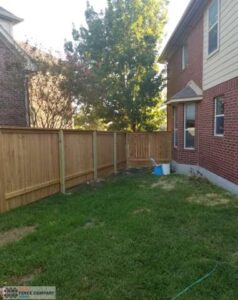
Day 0 — Layout & Wind Mapping
Mark windward sides, corners, and any “sail” runs. Choose where 6×6 (or steel) is non-negotiable.
Day 1 — Holes & Footings
Auger/core, bell in clay, bond to rock in limestone. Set posts true and braced; crown concrete tops.
Day 2 — Rails & Panels
Run rails square. Keep bay widths within spec. For horizontal applications, shorten spans and maintain a consistent screw rhythm.
Day 3 — Trim, Caps & Gates
Only after the skeleton is stable, hang gates on upsized posts; tune latches with positive captures.
Day 4 — Finish (optional)
Prep and stain in the cool window so finish bonds to stable wood—movement is the enemy of coatings.
Maintenance & Warranty Implications
Bigger posts don’t eliminate maintenance—they protect the maintenance you do.
- Annual spring check: Re-tension gate hinges and latches; verify post plumb at corners.
- Wash & finish cadence: Clean pollen/minerals and refresh stain on schedule; stiff fences keep coatings happier, longer.
- Soil watch: In clay zones, watch for downspout discharges near posts—redirect to reduce seasonal heave.
Because 6×6 (and steel) posts hold geometry, you’ll see fewer warranty-voiding conditions like excessive racking or chronic latch misalignment.